Forty Pence of Hope: A November Afternoon in the Arcade That Never Closes
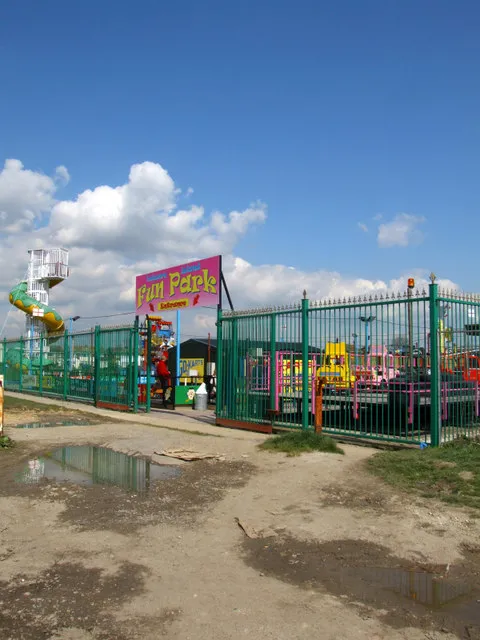
Photo: Julieanne Savage, CC BY-SA 2.0, via Wikimedia Commons
There’s a particular sound a seaside arcade makes in November. Not the frantic, school-holiday racket of August — more a gentle, echoing clatter, like someone tipping a cutlery drawer down a stairwell at half speed. I heard it before I saw it: the door propped open on the promenade, a strip of lino worn pale by decades of wet trainers, and the smell of hot dust, chip fat and that sweetish plastic tang that only ever lives inside a claw machine.
The season has packed up. The deckchair hut is shuttered, the ice-cream kiosk has a sign saying BACK AT EASTER, and the wind is doing that thing where it gets under your coat and stays there like a damp dog. But the arcade is open. Of course it is. It has been open since the late seventies, or maybe 1986 — nobody in the family quite agrees, and the laminated sign above the change machine simply says OPEN ALL DAY. EVERY DAY. It’s not a promise to tourists. It’s a promise to the town.
The Door That Stays Open
Inside, the lighting is exactly as it should be: too bright in patches, too dim in others, with one tube flickering above the two-penny falls like a reluctant heartbeat. A man in a navy fleece is feeding a fiver into the change machine with the solemnity of someone paying a utility bill. He does this every Thursday, apparently. Not because he needs the coins — because the machine gets thirsty, and if nobody feeds it, the whole place starts to feel wrong.
That’s the thing about an out-of-season arcade. In summer, it’s a service industry. In November, it’s a living room with fruit machines. The same six people drift in and out, nod at each other, and take up their positions. One woman has a plastic tub of 2ps and a system. I ask her what the system is. She says, “Patience,” and feeds another coin into the slot.
Small Change, Serious Business
The penny falls are the heart of it. Not because they pay out — they don’t, not really — but because they allow a certain kind of hope to continue existing at very low cost. You put in a coin, you watch it tumble, you nudge the machine with your hip, and a different coin falls a centimetre closer to the edge. That’s the whole drama. It’s ridiculous. It’s also, somehow, the most honest form of gambling Britain has ever produced.
A woman in a raincoat tells me she comes in because it’s warm and nobody talks to her. Then she talks to me for twenty minutes about her sister in Scarborough. The arcade does that. It gives you permission to be alone without being lonely. The machines don’t ask questions. They just clatter, and occasionally reward you with 20p and a sense that the universe is briefly on your side.
The Claw Machine Is Rigged With Love
The claw machine by the window is a different beast. It is not rigged in the way people mean when they say rigged — it is rigged with affection. The toys inside are a sorry bunch: a faded unicorn, three unidentified bears, something that might be a frog or might be a dog wearing a hat. The claw itself has the grip strength of a tired uncle. But every so often, it grabs something. And when it does, the whole arcade pauses.
I watch a girl of about nine win a small plush lobster. Her dad is more excited than she is. The man behind the counter — the owner’s son, I think — rings a little bell. It’s a genuine bell, not a recording. The girl looks faintly embarrassed. The dad takes a photo. The lobster goes into a coat pocket. The claw returns to its corner, defeated and proud.
That’s the quiet theatre of it. Nobody has spent more than a few quid. Nobody’s life has changed. But for about ninety seconds, a cold afternoon on a run-down seafront had a plot, a climax and a small, fuzzy resolution.
The Theatre of the Almost
Outside, the sea is the colour of old cutlery and the wind is rearranging the bins. Inside, a man is explaining to his mate why the 2p machine on the end is “the only honest one left”. His mate is not listening. He is watching a coin teeter on the lip of the payout tray. It falls. He cheers. He has won 8p. He spends the next four minutes putting it back in.
This is what people mean when they say seaside towns are clinging on. But clinging isn’t quite right. The arcade isn’t clinging. It’s just continuing, at its own pace, with its own rules. It doesn’t need a season. It needs a few regulars, a warm change machine and a door that stays open. The rest is weather.
What Forty Pence Actually Buys
I put 40p into the penny falls and lose it in under three minutes. I feel mildly robbed and entirely at peace. The woman with the tub of 2ps has won a small pile of copper and looks no happier than when I came in. The man in the fleece has moved on to the fruit machine and is explaining the intricacies of a “hold” to nobody in particular.
I buy a tea from the counter. It comes in a paper cup with a plastic stirrer and tastes faintly of the urn. It costs £1.20. The owner’s son asks if I want a biscuit. I say yes. He gives me two. That’s the other thing about out-of-season arcades: the hospitality is not on the menu, because there isn’t a menu. It’s just there, like the draught under the door.
The Last Light on the Prom
By four o’clock, the light has gone the colour of weak tea and the arcade is at its best. The windows are steamed up. The machines are clattering. Someone has put a radio on behind the counter and it’s playing something from the eighties that nobody admits to knowing the words to, but everybody does. The wind is still doing its worst outside. Nobody inside is in a hurry.
I leave because I have a train to catch, not because I want to. On the way out, I notice a handwritten sign taped to the change machine: SORRY, OUT OF ORDER LAST TUESDAY. BACK NOW. SORRY FOR ANY INCONVENIENCE. The apologetic tone is perfect. It’s the sort of notice you only get in a place that means it. The machine has known some of these people by name since the late nineties. It has watched them grow up, bring their own kids, lose their own 40p. It is not a machine. It’s a member of the family.
I walk back along the promenade with the wind at my back and the sound of 2ps still in my head. It’s a small sound. It doesn’t travel far. But it’s enough to remind you that some places don’t need a season to be worth visiting. They just need to keep the door open, feed the change machine, and let the quiet theatre of the almost carry on.