Ladle, Roll, No Signal: The Church Hall Lunch That Still Feeds a Town
The door that does not advertise
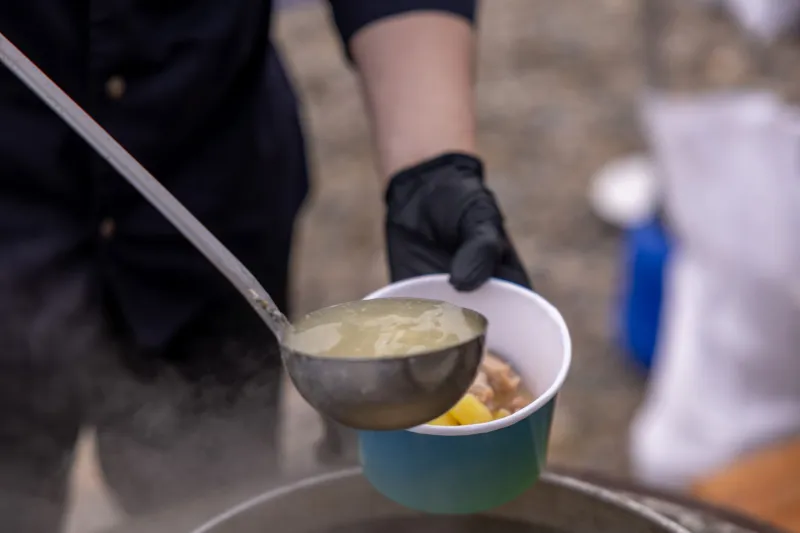
It is ten to twelve on a Tuesday and the smell hits you before the sign does: floor polish, slightly damp hymn books and a vat of leek and potato doing its slow, honest work. The sign is a piece of A4 taped to the glass. It says, in biro, 'Soup £4. Tea 50p. Raffle £1.' Someone has drawn a small, wonky steam curl coming off the bowl. There is no QR code. There is no loyalty app. There is a cash tin and a woman called Maureen who has been stirring since nine and will not be rushed.
This is not a restaurant review. I am not going to tell you the soup had 'notes of' anything. I am going to tell you that a church hall lunch is one of the last genuinely good-value afternoons left in a British town, and that most people walk straight past it on the way to a £12 sandwich.
What a good one looks like before you sit down
You can tell a lot from the threshold. A proper church hall lunch has a handwritten menu, mismatched bowls, a big metal urn and a stack of trays that do not quite match. The bread roll should come from a local bakery or, at the very least, taste like it was baked by someone who has met a baker. The butter should be proper butter. If there is a laminated menu with a font choice that suggests a brand consultant, walk on.
Other good signs: a stage at one end, a stack of folding chairs, a noticeboard advertising a jumble sale, a pilates class and a parish magazine that is three months out of date. Volunteers in aprons who tell you exactly where to sit. A second urn for tea. A small dish of sugar lumps. A raffle prize table that looks like someone has had a clear-out and decided to make it charitable.
Bad signs: 'soup experience', contactless-only, a QR code taped over the biro sign, or a menu that offers 'artisan sourdough'. None of these are crimes against humanity. They are just missing the point.
The first visit: queue, pay, sit down
Arrive at noon. Not half eleven, not half one. Noon is when it starts and noon is when the first bowl is at its best. You will queue for about four minutes. Someone will ask if you are on your own. This is not pity. It is an invitation to sit at the long table by the radiator.
Pay at the hatch. Say yes to the roll. Say yes to the raffle ticket even if you never win anything. Take a mug, not a paper cup, and remember to take it back at the end. Sit down next to someone you do not know. Within ninety seconds you will have covered the roadworks on the high street, the price of the tinned tomatoes in the Co-op, someone's hip operation and a rumour about the precinct that is almost certainly not true but is excellent company.
There is no Wi-Fi. The signal is patchy at best. This is not a drawback. It is the entire point. You cannot scroll through a church hall lunch. You have to talk to the person opposite, who has lived in the town for forty years and remembers when the bus station had a café.
The soup itself, and the raffle
Expect two choices, maybe three if it is a special occasion. Lentil, tomato and basil, vegetable, sometimes a chicken and sweetcorn that tastes like a hug from someone who is not afraid of pepper. It will be hot. It will be filling. It will cost less than a coffee in the chain place on the corner. There will be a basket of rolls and a plate of flapjack for fifty pence that you should absolutely say yes to.
The raffle is drawn at half twelve. The prizes are a bottle of something from the back of a cupboard, a box of biscuits, a small plant and a voucher for the garden centre. Someone wins the plant and gives it back. Someone else wins the biscuits and opens them immediately for the table. There is a brief, polite argument about whether the raffle made a profit. It did.
How to find a really good one
Start with the noticeboard in the Co-op window. Then the parish newsletter, the local Facebook group and the free paper that comes through the door and goes straight in the recycling. Look for the words 'all welcome' and a specific time, not 'see website'. If the sign says 'soup lunch, 12–1.30, £4', that is your place. If it says 'curated lunch experience', keep walking.
Ask in the greengrocer. Ask the person behind the counter at the charity shop. Ask someone walking a dog. Word of mouth is still the best search engine in this country. And if you find a good one, do not keep it to yourself. Tell a friend. Better still, take them.
Why it still matters in 2026
We are told, constantly, that everything is getting more expensive and more lonely at the same time. A church hall lunch does not solve either problem. But for four quid it puts a hot bowl in front of you, a roll beside it, a cup of tea in your hand and a table of people who will talk to you for an hour. That is not a small thing.
It is also not charity. It is a club with soup. The volunteers are not there to pity you. They are there to raise money for the roof, to use up the bread, to see their friends and to keep the hall from going quiet. You are not a case study. You are a customer who forgot to bring cash and will be reminded, gently, by Maureen.
So take a fiver. Take a tenner if you want a raffle ticket and a slice of cake. Take your mug back. Sit next to a stranger. Let the phone go flat. In a year when everything wants a subscription, a direct debit and a QR code, there is still a door behind the estate agent with a biro sign and a bowl of soup. It is not cool. It is better than cool.