One Room, One Volunteer, Twenty Minutes: The Lunchtime Museum Dash
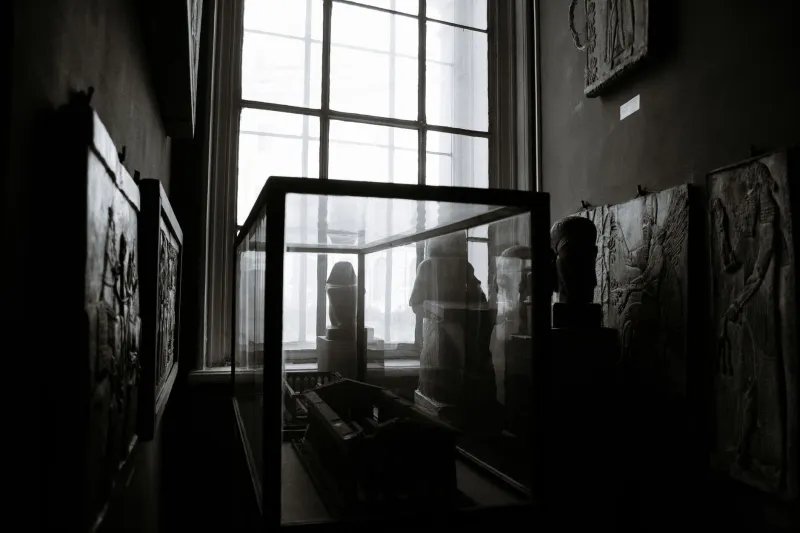
The woman on the desk looked up, clocked the lanyard and the slightly hunted expression, and said: "You've got about twenty minutes, haven't you." She wasn't asking. She pushed a leaflet across, tapped a donation box the size of a shoe, and went back to her crossword.
This is the correct way to visit a museum. Not the four-hour slog through nine galleries and an audio guide, ending in a café you don't want and a gift shop you can't afford. One room. Twenty minutes. Out.
Twenty minutes is a complete visit
There's a myth that culture has to be earned with time — that a proper visit involves reading every label, watching the film, and buying the catalogue on the way out. It doesn't. Attention isn't measured in hours. It's measured in what you actually remember a week later, and after a long museum day the honest answer is usually one object and a sandwich.
Restrict yourself to a single room and something odd happens. You slow down. You look at things properly because there are only eleven of them. You read the labels, all of them, and discover that the label is often better than the object.
Twenty minutes is also the exact length of a lunch break you can defend to your manager, which is not nothing.
How to find the good small rooms
They don't advertise, which is most of the charm. Some hunting notes:
- Search the town name plus "heritage centre", "old jail", "mill", "toll house", "chapel" or "railway" rather than "museum". The small ones rarely use the word.
- Look for local history and civic society collections. Often a single room above a library, in a converted waiting room, or in the back of a tourist information hut.
- Check opening days before you go. Monday is a lost cause almost everywhere. Many are open Wednesday to Saturday, ten until four, run by two people and a rota.
- Follow the brown signs on a ring road. Those little signs pointing to a regimental collection or a canal museum are usually pointing at exactly the sort of place worth twenty minutes.
- Ask at a café counter. Staff know which back room is open, which is shut for rewiring, and which has the mummified cat.
Entry is nearly always free, and the donation box is nearly always a Quality Street tin. Bring a fiver.
The volunteer is part of the exhibit
You will meet someone on the desk. They will be reading, or doing the accounts, or eating a sandwich they'd rather you hadn't seen. They will almost certainly be delighted you came in, and they will know more about that room than any curator.
Ask one question. Just one. Where did the big thing in the corner come from? You'll get twenty minutes of answer and you'll have to gently extract yourself, but it's the best value in the building.
The desk volunteer is also the reason these places survive. Nobody is paying them. They are there because the alternative is a skip, and because somebody's grandfather's tools deserve better than a car boot sale.
The weird object in the corner
Every small museum has one, and it's usually unlabelled or labelled in a way that raises more questions than it answers.
A two-headed lamb in a glass case. A cheese press the size of a wardrobe. A Victorian truncheon. A tin bath with a story attached that involves a flood and a wedding. A model of the town in 1911, made by a man whose name is on a brass plate and nowhere else.
Find the object. It's almost always in the corner, because corners are where things go when nobody's quite sure what to do with them. That object is the entire reason to come. It exists nowhere else, it's not on a postcard, and no algorithm will ever recommend it to you.
A short-visit etiquette
- Sign the visitors' book. They count those entries. It's how they justify the grant.
- Put something in the box. Free entry isn't the same as free.
- Don't photograph the documents or anything behind glass with a flash. Ask first. The answer is usually yes.
- Don't outstay. If you said twenty minutes, leave at twenty. Nobody wants to be the person who has to hover.
- Say thank you on the way out. By name if you caught it. It matters more than you'd think.
Leaving before cultural indigestion
The trick is to go before you're full. Come out while you still want more, not while you're eyeing the exit and wondering whether the second room is worth it. Walk down the street afterwards, and let one thing follow you back to your desk — the two-headed lamb, the brass plate, the tin bath.
Then have a sandwich and get on with your afternoon, quietly pleased with yourself for having done something other than a meal deal and a scroll. Twenty minutes, one room, no gift shop. It's the best cultural bargain in the country, and it's probably open on Saturday.