Bacon, Banter and a Route That Never Changes: A Morning Aboard the Estate's Most Important Van
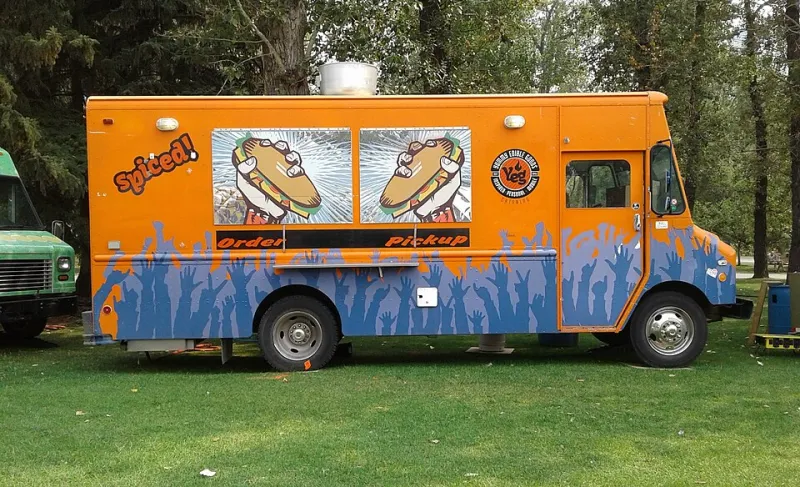
Photo: KatherineCraw_18, CC BY-SA 4.0, via Wikimedia Commons
There's a particular sound an industrial estate makes at ten in the morning. Not the forklifts or the compressors — those have been going since seven. It's the low, hopeful rumble of a diesel engine easing off the main road, followed by the clatter of a side door sliding open and a voice shouting, "Bacon's on!"
By 10:15, Debs has reversed her van into the usual spot between Unit 14 and the pallet yard. She's been doing this route for eleven years, which means she knows that the bloke in the paint shop takes his tea white with no sugar, that the lads on the packing line will send one person out with a list written on the back of a delivery note, and that the site manager will claim he's "just having a coffee" before ordering a bacon bap with extra hash browns. Every single day.
The Order That Tells You Everything
You can learn a lot about a workplace from what people order. The mechanics at Unit 6 go for sausage and egg, brown sauce, no butter — practical, unfussy, eaten standing up. The two women who run the fabric cutting room share a single bacon bap cut in half and a pot of tea for two, which is the most civilised thing I've seen all week. The young lad on the forklift always asks for a can of energy drink and nothing else, and Debs always says, "You'll rattle," and he always laughs like it's the first time.
Then there's Barry.
Barry has been "cutting down" since roughly the time Debs started this route. Every morning he says, "Just a tea today, love. I'm being good." Every morning Debs nods, pours the tea, and puts a bacon bap on the griddle anyway. Every morning Barry pays for both, mutters something about tomorrow being the day, and walks back to Unit 9 with his shoulders a little less hunched. Nobody mentions it. It's a ritual, not a negotiation.
A Mobile Institution
We talk a lot about high street institutions — the greasy spoon, the market stall, the pub on the corner. But some of the most important ones don't have an address. They have a route.
Debs's van is a small business in the most literal sense: one van, one griddle, one woman who has worked out exactly how many bacon rashers fit on a bap without it becoming a structural problem. She buys her bread from a bakery two towns over, her sausages from a butcher who still writes the prices on a whiteboard, and her brown sauce in bulk because there would be a mutiny otherwise. The margins are thin and the hours are long. She's on the road by half six and doesn't finish cleaning down until gone two.
But ask anyone on this estate what keeps the place running and they won't say the HR portal or the vending machine. They'll say Debs.
Because the van isn't just lunch. It's the ten minutes where the packing line and the paint shop actually talk to each other. It's where you find out someone's daughter passed her driving test, where a grievance gets aired before it becomes a formal one, where a new starter gets told which unit has the good kettle. It's the estate's living room, and it happens to serve a very decent bacon bap for £3.80.
The 10:15 Economy
There's a quiet lesson in this van about how small-business Britain actually works. It's not glossy. It's a woman doing sums at five in the morning, a regular who pays in shrapnel, a dairy delivery that's gone up forty pence a week and the decision about whether to swallow it or pass it on. It's a plastic tub of change zip-tied to the counter and a handwritten sign that says "CARD MACHINE TEMPERAMENTAL — CASH WELCOME."
And it's the fact that on a cold Tuesday in November, with the sky the colour of wet cardboard, twenty-two people will still walk across a windy yard for a hot sandwich because it's the best part of the morning. Not because it's gourmet. Because it's theirs.
By half ten the queue has thinned. Debs wipes down the griddle, restocks the napkins, and has a quick word with the bloke from the unit next door about a leaking radiator he's been ignoring for three weeks. He promises to look at it. He won't. She knows he won't. She writes it on her list anyway.
Then she checks the clock, says her goodbyes, and pulls out of the yard. She's got one more stop by the retail park and then it's home to do the paperwork. The estate goes back to its compressors and its forklifts. But something's been fed that a vending machine could never manage.
If you're ever near an industrial estate at ten in the morning and you see a van with its side door up and a handwritten menu taped to the glass, do yourself a favour. Queue up. Order the bacon. Listen to the bloke in front of you claim he's cutting down. You'll learn more about the town in ten minutes than you would from a year of council minutes.