Due Back Tuesday: What the Library Returns Trolley Knows About Your Town
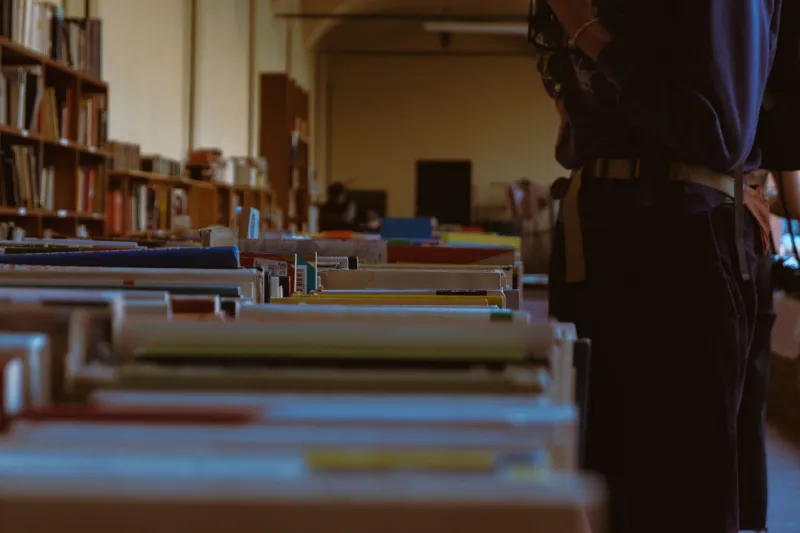
There is a trolley near the door of my local library that nobody photographs for the council website. It has wobbly wheels, a laminated sign saying Returns, and a permanent lean to the left. On a good day it holds forty books. On a bad day it holds a stack of paperbacks, a toddler’s board book, two DVDs and somebody’s遗忘 reading glasses. It is not glamorous. It is, however, one of the truest things in town.
We talk a lot about libraries as buildings, budgets and borrowing figures. Fair enough. But the returns trolley is where the quiet social history actually accumulates. Every book that comes back carries a little evidence of the person who had it. Not in a creepy way — in a bus-ticket, shopping-list, pressed-leaf way. And if you stand there for five minutes while the librarian checks the spine, you learn more about your neighbours than any neighbourhood app will ever tell you.
The Trolley as a Town Census
A returns shelf is not data. It is better than data. Data tells you footfall was up eight per cent in the third quarter. The trolley tells you somebody was reading a diet book and eating a Mars bar at the same time. It tells you a child has been using a hospital appointment card as a bookmark, and that someone else clearly stopped at chapter three of a crime novel and gave up, because the bus ticket is still wedged there with the date printed on it.
You find shopping lists written on the back of envelopes: milk, cat food, birthday card for Auntie Jean. You find a receipt for a tin of paint and a packet of bourbons. You find a pressed sycamore leaf, a lottery slip, a dry-cleaning ticket, a photo of a dog that has no business being that blurry. None of it is important. All of it is a tiny, accidental archive of ordinary life in 2026.
Librarians are far too professional to comment. They just remove the scraps, put them in a box or the bin, and shelve the book. But they know. They have seen your takeaway menu. They have seen your list of questions for the doctor. They have seen the birthday card you forgot to write in. The returns trolley is the closest thing Britain has to a confessional that asks no questions and charges no late fees.
The Bookmark Left in Chapter Three
The title of this piece is not an accident. Chapter three is where a lot of reading stops. It is the point where a book has to prove itself, and sometimes it doesn’t. The bookmark left there is a small monument to good intentions. A bus ticket. A folded corner. A train reservation printed at a machine that no longer exists at that station.
What I love about these abandoned bookmarks is that they are not really about the book at all. They are about the moment. Somebody thought they would read on the way home. Somebody thought they would finish it on Sunday. Somebody thought they had more time than they did. The bookmark is a cancelled plan, quietly returned to the shelf.
Occasionally the scrap is more personal. A birthday card with To Mum on the envelope, never written. A letter from a hospital. A photograph of a kitchen that has since been redecorated. You do not need to know the story. The fact that it was left in a library book is the story: a small, private thing briefly held in a public place, then handed back by accident.
What the Returns Shelf Says About 2026
Let’s not pretend libraries are having an easy time. They are not. Budgets are tight, opening hours have been nibbled at, and the reservations queue for the new big thriller is less a queue and more a lifestyle choice. If you want the latest Richard Osman, you will wait. That is the honest truth. The library is not a shop, and the wait is part of the deal.
But the returns trolley also shows what libraries are doing right. It shows people using them for things that have nothing to do with borrowing books: printing a form, using a computer, attending a rhyme time, sitting somewhere warm without being expected to buy a flat white. It shows children choosing books by colour and adults choosing them by cover. It shows the local history room quietly doing its thing, and the noticeboard advertising a job club, a coffee morning and a lost cat.
In 2026, a library is one of the last indoor places you can go without a spending obligation. That is not a small thing. The returns trolley is the physical proof: all those books came from somewhere, went out into the town, and came back. A civic promise, made in paper.
Getting More Out of Your Branch Without Pretending the Queue Is Glamorous
I am not going to pretend a library reservation is a thrilling lifestyle experience. It is a waiting list. But it works, and it is free. Here are a few honest picks for getting more out of your local branch this year.
Reserve things properly. Use the online catalogue or ask staff to place a reservation. The bestseller queue is long, but the request service is magic. Ask for something slightly off the bestseller list and it may arrive in days.
Ask for a reading map, not a recommendation. Tell a librarian three books you loved and three you hated. They are very good at this. They will not judge your hatred of a prize-winner. Much.
Use the local history collection. Every branch has one, even if it is just a filing cabinet and a folder of old photographs. It is the most underused part of the building and the most likely to surprise you.
Check the events board. Rhyme time, book groups, author talks, craft sessions, digital help. Some of it is aimed at people with more time than you. Some of it is genuinely useful. You will not know unless you look.
Try the library app for audiobooks and ebooks. It is not as nice as a physical book, but it is excellent for commuting and it costs nothing. The returns trolley cannot compete with that, but it can coexist.
Return your books on time. Obvious, but the trolley is not a storage facility. Somebody else is waiting for that chapter three crime novel, even if they do not know it yet.
A Small Defence of the Scrap
In fifty years, someone will write a thesis about the scraps we leave in books. They will say something clever about attention spans and public space. They will probably be right. But for now, the returns trolley is just a trolley. It smells faintly of dust and hand sanitiser. It leans left. It holds the town’s reading habits, its bus tickets and its forgotten birthday cards.
Next time you return a book, look at the shelf before you walk away. You might see a pressed leaf. You might see a shopping list. You might see someone else’s chapter three. It is not glamorous, and it is not meant to be. It is just the quiet, papery evidence that a town is still reading, still borrowing, still coming back.
Due back Tuesday. There is something reassuring about that.