Meat Trays, Misfits and a Referee Who's Had Enough: A Night at Local Wrestling
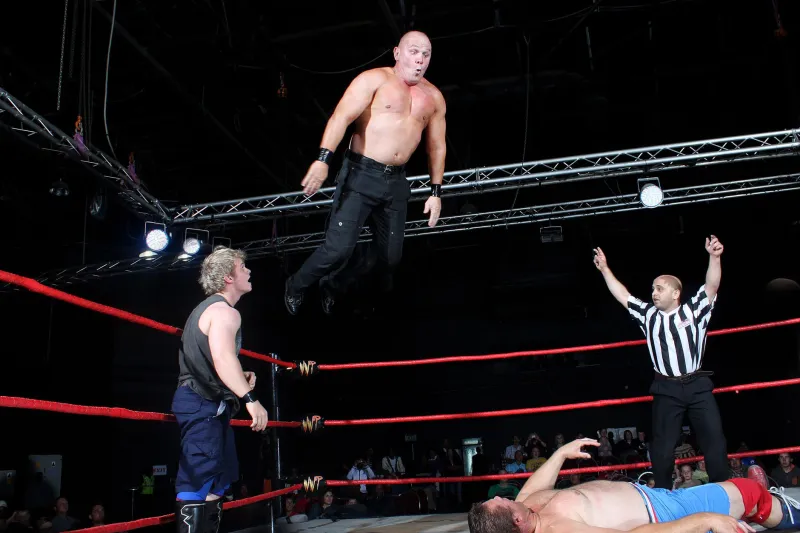
The first thing you notice at a local wrestling show is not the ring. It is the smell: chips, deep heat and the faint ghost of a leisure-centre swimming pool. A folding table by the door is doing brisk business in raffle tickets. Somewhere behind a curtain, a bloke in a referee shirt is explaining the rules to a child who has already stopped listening. This is grassroots British wrestling in 2026, and it is miles away from the glossy arena product — and all the better for it.
Before the first bell
You arrive early because you have been told to. Not for the wrestling, but for the queue. The doors open at half six and by twenty to seven the car park is a mosaic of hatchbacks, white vans and one Vauxhall Corsa with a spoiler that has clearly seen things. Inside, the merch table is the first port of call. A fiver gets you a sticker and a signed photo of a man called 'The Bastard' who, ten minutes later, will help an elderly woman carry her chair. A tenner gets you a T-shirt. Fifteenth gets you a T-shirt and the wrestler's undivided attention for roughly ninety seconds, which is more than most arena acts will give you all night.
The merch table is also where you learn the local lore. The woman selling the shirts knows exactly who is wrestling, who has pulled out, and whose knee is playing up. She is the closest thing this show has to a box office, a press officer and a medical tribunal. Buy something. It is the least you can do.
The interval is the main event
Wrestling happens in bursts. A match lasts ten minutes, maybe twelve, and then there is a pause while someone fetches a chair or a wrestler argues with a teenager in the front row. But the real interval — the bit everyone talks about on the way home — is the raffle.
There is a queue for the raffle. There is a queue for the chips. There is a queue for the loo, which is really just a queue for the leisure centre's communal facilities and a chance to overhear two pensioners debating whether the referee is 'having a laugh' or 'genuinely useless'. The raffle tickets are a pound a strip, and the prizes are laid out on a table like offerings: a meat tray from the local butcher, a bottle of whisky, a box of chocolates, a voucher for a car wash. The meat tray is the star prize and everyone knows it. When the winning number is called, the room applauds with the sort of warmth usually reserved for a cup final.
The regulars know the script
There is a particular kind of veteran fan at these shows. They know every chant before it starts. They know the referee's name and his day job. They know that the wrestler in the mask is actually Dave from the carpet shop, and they will not tell you, because that would spoil it. They boo the villain with genuine affection, the way you might boo a panto dame. They cheer the goodie even when he messes up a move. They are the rhythm section of the night.
If you are new, sit near them. Not too near — they have their seats — but close enough to pick up the cues. You will learn when to clap, when to shout and when to keep quiet while a man in spandex climbs slowly onto the top rope. You will also learn that the loudest cheer of the night is not always for a finishing move. Sometimes it is for a child winning a meat tray.
Why it beats the polished product
The big arena shows are brilliant at being shows. The lights are perfect. The sound is perfect. The merchandise is priced accordingly. But there is a polish to them that keeps you at arm's length. You are watching a product. At the local show, you are part of the room.
Here, the ring is held together by tape and goodwill. The sound system crackles. The wrestlers sometimes land awkwardly and the audience winces with them. The storylines are nonsense and the acting is variable, but the reaction is real. When a wrestler grabs the mic and tells the crowd they are the worst he has ever seen, the crowd boos with the specific joy of people who have paid £12 and are determined to get their money's worth.
It is also funnier than most comedy nights. Not because anyone is trying to be funny, but because the whole thing is so gloriously unscripted. A referee who cannot count to three. A wrestler whose entrance music cuts out halfway down the aisle. A raffle prize that turns out to be a box of eggs with a best-before date from last Tuesday. You cannot plan that. You cannot polish it. You just have to be there.
Practical notes for your first show
Take cash. Some places have a card reader now, but plenty do not, and you will feel like a fool missing out on the raffle because you only brought your phone. Arrive early enough to get a seat with a view but not so early that you are sitting in silence with the ring crew. Buy a raffle ticket even if you do not want the meat tray. Cheer the villains. Do not over-explain the rules to your neighbour unless they ask. And check the local listings — this is a circuit that runs on word of mouth, Facebook groups and a laminated poster in the chip shop window.
If you need a craft beer list and a designated parking space, this is not your night. If you want a night out where the main event is the room itself — the queue, the raffle, the cheers, the bloke in the corner who has been coming since 1998 — then get yourself a ticket. The wrestling is only half the story.